
How do you learn new skills?
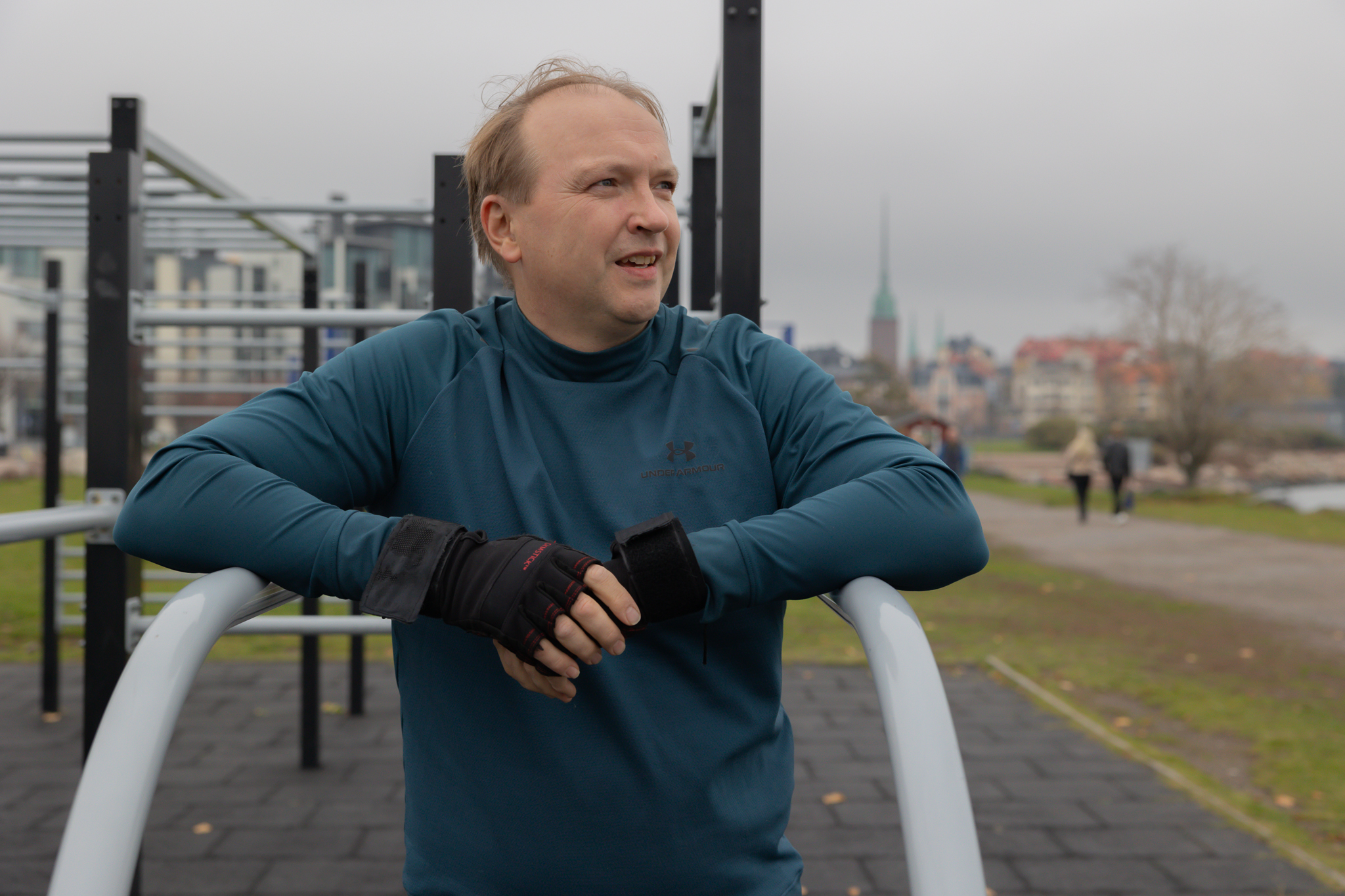
My own strongest experiences of learning skills are related to sports, although I have also gained insights from professional life, school, and music. As a young man, I wrestled for a few years and learned the importance of repetition. A movement must be repeated over and over so that it becomes 'muscle memory'. Unfortunately, my own wrestling career was short-lived—only a few years—as it was difficult to reach the top as a tall, thin young man who started the hobby too late, even though coaching guru Seppo Yli-Hannuksela encouraged me to continue. From this experience, I learned that learning a skill requires long-term commitment and that it is better to start earlier rather than later.
In adulthood, building on school sports and following the game, I took up basketball and—as a continuation of wrestling—artistic gymnastics and its supporting discipline, calisthenics. In these, I have noticed that skill practice progresses best when you invest in short sessions three or five times a week rather than one longer session. Coaching literature also supports the view that the prerequisites for learning technical skills are regularity and frequency of practice.
During training sessions with Espoon Telinetaitureiden, I began to identify the reasons for the lack of mobility in my shoulder area. This provided insight into why handstands had been problematic for me. Skilled coach Leevi Makkonen helped me notice what it was about—shoulder mobility—and found exercises to improve it. This, in turn, has made performing handstands easier, and now I have made significant progress. The right expertise can help and accelerate the learning of a skill.
On a general level, several factors can be identified that affect the learning of new skills, such as motivation, a safe and encouraging learning environment, active teaching methods, and good physical and mental well-being. Together, these factors form the basis for effective learning.
What lessons from skill learning can be applied to the corporate world?
Professional life is constantly evolving. New skill requirements emerge, and some previously important skills fade into the background. Therefore, there is a constant need for learning. Those who learn best gain an advantage in the labour market. Efficiently learning new things and continuous improvement are the alpha and omega of everything.
Continuous improvement is a skill needed in professional life and in all organisations. Toyota's teachings are largely distilled into daily continuous action, kata. Through continuous, daily practice, habits are formed and eventually, in the long run, a culture. In his book Toyota Kata (2010), Mike Rother illustrates how daily continuous practice transforms into a culture over the long term.
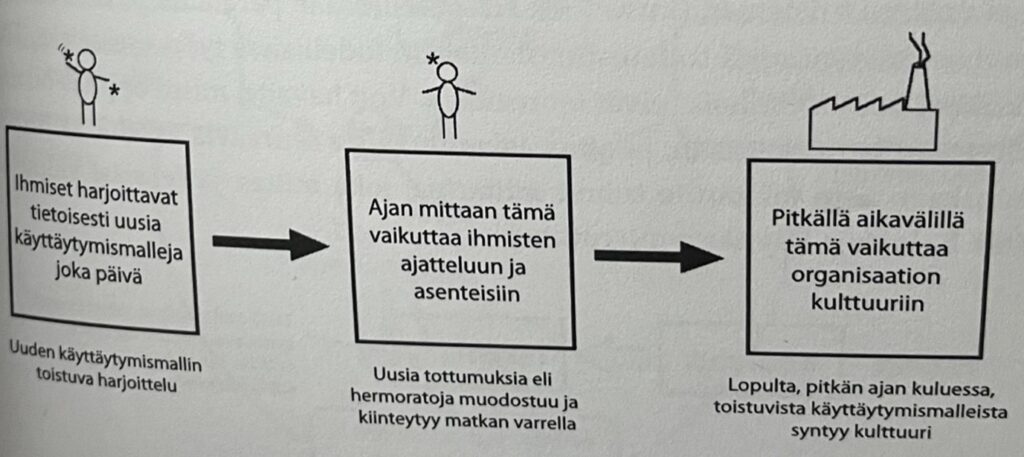
My key takeaways:
- Meaning and motivation are the starting point for everything.
- It pays to be open to knowledge and its internalisation—seek information and internalise it deeply.
- Once the correct procedure/technique is clear, repeat it frequently, intensely, and regularly.
- A mentor or coach can also be the missing piece in business operations. There is a risk of banging one's head against a wall when we cannot see for ourselves what the issue actually is. An outside perspective can open windows that lead to the heart of the matter.
- Believe and trust in the right process and way of doing things. Often, the greatest and best results require persistent and long-term work to materialise. You must have a strong vision and trust that the right process creates results when followed with discipline.
#change #changeofworkingmethods #renewal #learning #growth #development #dailymanagement #operationalexcellence #coachingleadership #coaching #leadership #quality #qualityofoperations #excellence #strategy #productivity #strategy #strategicplanning #business #leadership #consumerbehavior #consumerinsights #customerexperience #customersatisfaction #sustainability #operationalexcellence #lean #mikotreenit #on-the-move #well-being #lifestyle